
TopicsLatest information
2026.07.15
Introduction to FPC Design: How to Use Reinforcement Materials and Key Considerations
ColumnFPCs are flexible printed circuits, but making the entire board flexible often leads to reliability issues.
As explained in our previous articles, it’s essential to intentionally create stiffened areas using stiffeners (reinforcement plates) to ensure mechanical reliability.
-
Purpose of Reinforcement Materials
To recap an important point from the last section: stiffeners are used to provide rigidity and mechanical stability in critical areas of an FPC.
Main purposes of using stiffeners
- Ensure rigidity and prevent warpage in component-mounting areas.
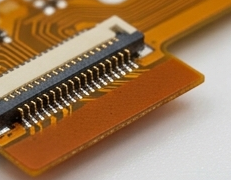
- Adjust thickness and prevent cracking or delamination at connector mating sections*.
- Keep specific areas from bending where flexibility is undesirable.
Stiffeners are always applied to areas designed to behave like rigid FR-4 sections.
* : The mating section refers to the joint area where two components - typically a male and a female part - fit together precisely without any misalignment. In an FPC, the terminal section functions as the plug (male), while the connector serves as the receptacle (female). -
Types of Stiffener Materials
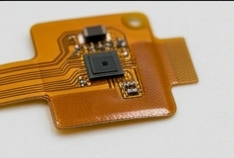
Polyimide Stiffeners
Polyimide is the primary and most recommended stiffener material for FPCs.
Characteristics
- Softer than glass epoxy (FR-4).
- Thermal expansion closely matches that of the FPC base material.
- Produces minimal residual debris during manufacturing, maintaining high cleanliness compared to other stiffener materials.
FR-4 / CEM-3 (Glass Epoxy)
A common material for rigid PCBs, but used as FPC stiffeners only when required.
Characteristics
- Enables thicker and more rigid support regions than polyimide.
- Offers stiffness equivalent to rigid PCBs.
- Generates powdery debris from cut edges, reducing overall product cleanliness.
PET Stiffeners
Previously used as a lower-cost alternative to polyimide when applicable, but now rarely used.
Characteristics
- Covers nearly all thickness ranges available with polyimide stiffeners.
- Poor heat resistance; not suitable for soldering or reflow applications.
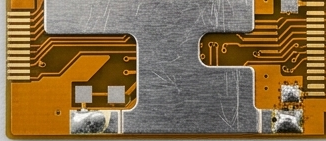
Metal Stiffeners (SUS, Aluminum alloy, etc.)
The most expensive among stiffener materials - use only when non-metal alternatives are impractical.
Characteristics
- Extremely high rigidity.
- Excellent thermal conductivity.
-
Adhesives for Stiffener Lamination
Pressure-sensitive adhesives (double-sided tapes) are occasionally used with PET stiffeners or FR-4 stiffeners when no heat resistance is required.
However, in most cases, thermosetting adhesives are employed to achieve strong and reliable bonding. -
Points to Watch When Using Stiffeners
The boundary between rigid and flexible areas is critical. Avoid placing components, coverlay openings, or trace-width changes across this boundary, as discussed in previous sections.
Be mindful of step height differences introduced by stiffener attachment. This may cause interference or assembly issues during product integration. One of effective counter measures is to minimize stiffener thickness where possible.
#FPC #My first FPC #FPC design #Rigid area #Stiffner
