
TopicsLatest information
2026.08.04
Introduction to FPC: Key Points for TH and LVH design - Part 2
ColumnManufacturing Tolerances and Minimum Dimensions
Design rules such as minimum land diameter, annular ring width, minimum through-hole diameter, or coverlay openings should be confirmed with us. Please ensure that your design complies with our manufacturing specifications by consulting with our engineering team.
Assembly and Mounting Considerations
Use of Stiffeners (for Component Mounting Areas)
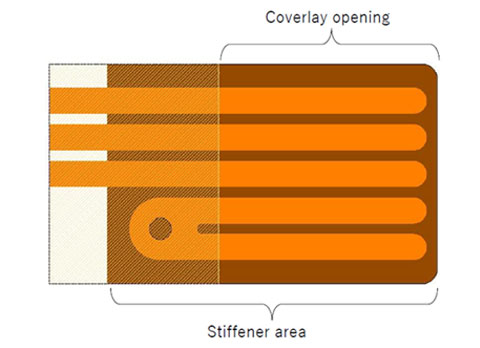
For connector mating areas and component mounting sections where TH or LVH vias are located nearby, it is recommended to apply stiffeners. This helps prevent warping or damage during assembly. When designing the stiffener length, please consider for potential misalignment during stiffener and coverlay lamination. The stiffener should be designed slightly longer than the coverlay opening to ensure appropriate coverage and reliability.
-
Solder Mask and Openings
Select suitable protection material to protect conductors in case of near TH/LVH areas ;
- Use coverlay in areas that include bending stress
- Use
solder resist in component mounting areas
Selecting the right material based on the application helps ensure durability and performance.
Additional Design Techniques
When Placing a Large Number of THs (or LVHs)
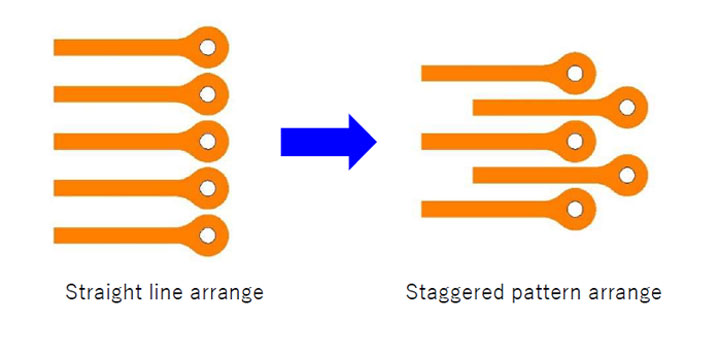
Since TH/LVH lands generally require more space than traces, placing them in a straight line can reduce available routing capacity.
By arranging TH (or vias) in a staggered pattern, routing efficiency can be significantly improved.
Especially LVH structures, aligning vias in a straight line may also lead to stress concentration during flexing. A staggered layout is therefore an effective method for improving both routing density and mechanical reliability.
#FPC #My first FPC #FPC design #Through Hole # Manufacturing Tolerances # Minimum Dimensions #Mounting Considerations # Staggered pattern arrange
